

At SEMdeepdive, we’ve witnessed countless advertisers’ bewilderment upon discovering their competitors secure the same ad positions for a fraction of their spend. The revelation often sparks a pivotal question: How can identical keywords on the same platform command such dramatically different prices?
How Can Identical Keywords Cost Different Advertisers Different Amounts?
The answer lies not in the bidding strategy alone, but in the culmination of website, data attribution, and platform infrastructures combined with user-engagement metrics that weigh most heavily on PPC advertising costs.
PPC specialists learn quickly that the displayed keyword bid represents merely the surface of a much deeper bidding system.
Core Components of PPC Pricing
The cost-per-click (CPC) in PPC platforms like Microsoft Ads and Google Ads is determined by several technical factors and scoring systems that affect keyword CPC prices. For example, your website’s architecture, user experience (UX), and historical ad performance metrics are crawled by ad bots, measured, and then graded by proprietary algorithms developed by paid search platforms. These cumulative measurements determine your actual cost-per-click (CPC).
While you and your competitor set a bid of $4 for keyword phrase “luxury carpets online,” your competitor’s superior technical infrastructure might grant them that click for $1.50, while you pay $4 for the same click.
The Quality Score Multiplier Effect
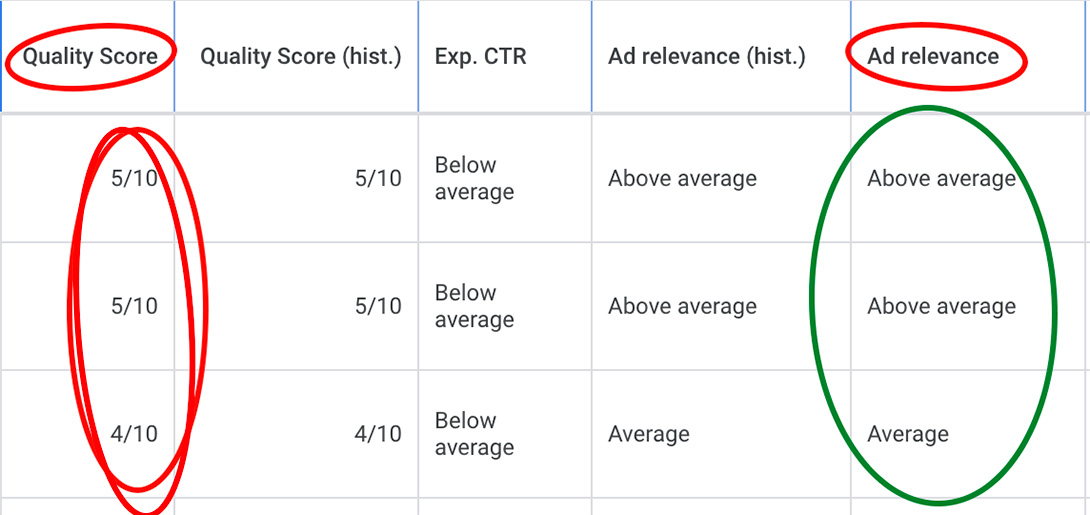
Quality Score isn’t just another metric—it’s the silent arbitrator of your advertising costs. At SEMdeepdive, we’ve documented many cases where improvements in ad rank and quality scores lowered average CPC by more than 50% without sacrificing ad position.
Think of Quality Score and Relevance indicators as multipliers that either rewards technical excellence or penalizes overlooked infrastructure issues.
Why Platform Algorithms Favor Some Advertisers
Search engine ad bots and algorithms operate like discerning art critics, evaluating not just the bid amount but the entire user experience (UX) canvas. Every millisecond of page load time, every percentage point of bounce rate, every user interaction signal influences this evaluation.
An algorithms’ preferential treatment isn’t random—it’s a calculated response to demonstrated technical proficiency and user satisfaction met
Technical Infrastructure and Impact on PPC Costs: Advertiser Comparison
The following example illustrates common patterns we’ve observed across PPC strategies over the years. While this comparison is constructed for illustration purposes only, it broadly represents some of the cost disparities we regularly see between advertisers who understand PPC’s connection to technical infrastructure and those who don’t.
Company X: High-Performance Digital Infrastructure
Company X represents advertisers who partner with an experienced digital marketing agency that understand PPC success requires mastery of multiple disciplines. Their campaigns benefit from expert implementation across web development, UX design, technical SEO, and conversion optimization.
Product pages load in under two seconds, but speed is just the beginning. Each landing page precisely mirrors its corresponding ad content, creating seamless user journeys. The conversion funnels undergo continuous A/B testing, with friction points eliminated through expert UX optimization. Their conversion tracking captures every user interaction, feeding this rich behavioral data back into bid strategy refinement.
Most importantly, all these elements work in harmony because they’re managed by an expert team that understands how landing page content, technical performance, and PPC metrics interconnect.
Company Y: Common Technical Oversights
Company Y represents advertisers attempting to manage complex PPC campaigns without understanding their connection to other technical disciplines. Their internal team might excel at basic bid management but misses critical optimization opportunities.
Their landing pages contain different messaging than their ads, creating disconnect in the user journey. Server response times exceed five seconds. Mobile users encounter layout shifts and rendering delays. The conversion funnels contain unnecessary steps and friction points that drive up bounce rates. These technical gaps aren’t just UX issues – they directly multiply PPC costs.
Breaking Down PPC Cost Differences
Initial Keyword Bid Comparison
In this illustration, both advertisers set keyword bids of $3.50 for their primary keywords. While their bid strategies appear similar on paper, Company X‘s bids work harder because their partner, an expert SEM company, has aligned their landing pages, ad content, and technical infrastructure.Company X
Professional PPC Infrastructure
Technical Implementation & Strategy
- Sub-2-second page load with fast mobile rendering
- Ad copy aligns perfectly with landing page content
- Conversion funnels optimized through A/B testing
- Granular conversion tracking feeds bid strategy
- Landing pages validate user search intent
- Content reinforces keyword targeting
- Integrated technical SEO and PPC strategy
- Expert agency management of all components
PPC Performance Metrics
- Quality Score: 8/10
- Actual CPC: $2.15
- 6-Month Ad Spend: $27,500
- 600 Conversions
- Optimal ROI for Ad Position
Optimized PPC Performance
Company Y
Isolated PPC Management
Technical Gaps & Implementation
- 5+ second load times with mobile rendering issues
- Disconnect between ads and landing pages
- Friction points in conversion process
- Basic tracking misses key interactions
- Generic content fails to validate intent
- Misaligned keyword and content strategy
- SEO and PPC managed separately
- In-house management missing opportunities
PPC Performance Metrics
- Quality Score: 4/10
- Actual CPC: $3.25
- 6-Month Ad Spend: $60,500
- 300 Conversions (lower conversion ratios)
- Premium CPC Costs for Same Position
Cost-Inflating Infrastructure
CPC Analysis
The professionally optimized approach (Company X) typically sees costs around $2.15 per click. Their comprehensive optimization—from landing page content to conversion funnels—elevates their Quality Scores. Meanwhile, Company Y often pays closer to $3.25 for the same ad positions due to misalignment between their ads, landing pages, and technical implementation.
On top of the price differential, Company Y’s poorly optimized landing pages lead to significantly lower conversion rates – in some cases dropping to zero.
This pattern of CPC differences and higher cost-per-acquisition (CPA) reflects the real impacts of attempting to manage complex PPC infrastructure without expert guidance.
Monthly Budget Impact
These CPC variations create significant budget implications. Over a six-month period, similar click volumes might cost Company Y 50% more than Company X—more than enough to fund comprehensive SEM management services that would eliminate these inefficiencies.
This represents the hidden cost of treating PPC as an isolated channel rather than part of an interconnected digital marketing infrastructure.

Technical Infrastructure Impact
Your website’s technical foundation doesn’t just influence user experience—it directly impacts your advertising costs. We’ve seen clients reduce their average CPC by 35% after implementing comprehensive technical optimizations.
Server response time, code efficiency, and infrastructure choices create ripple effects throughout your entire digital marketing system.
User Experience Metrics
The poetry of perfect user experience (UX) translates directly into advertising ROI. Consider how your landing pages guide visitors through their journey. At SEMdeepdive, we’ve documented direct correlations between improved UX and decreased advertising costs across many campaigns.
Historical Account Performance
Your account’s ad history whispers volumes to advertising platforms. Much like a credit score influences loan terms, your historical performance shapes future advertising costs. We’ve witnessed accounts transform from costly underperformers into efficiency machines through strategic budget allocation and performance optimization.
How Do You Know If You’re Overpaying for Keywords?
The signs of inefficient PPC spending often hide in plain sight. While some businesses accept high costs as “industry standard,” our experience at SEMdeepdive suggests otherwise. The key lies in knowing where to look and what questions to ask.
Key Performance Indicators to Monitor
Beyond basic metrics lies a deeper story of campaign efficiency. Our PPC management approach examines not just the obvious metrics, but the intricate relationships between quality scores, conversion rates, and cost structures.
Common Red Flags in PPC Campaigns
When we audit new client accounts, certain patterns emerge consistently. High bounce rates coupled with premium CPC prices often signal misalignment between paid search strategy and landing page execution.
These misalignments represent opportunities for significant cost reduction.
Benchmarking Against Industry Standards
While every business is unique, certain performance benchmarks provide valuable context. Through our work as a leading SEM company, we’ve developed proprietary benchmarking methodologies that help identify opportunities for cost optimization.
Strategies to Lower Your CPC While Maintaining Ad Position
Cost reduction without ad position sacrifice isn’t theoretical—it’s a precise science. At SEMdeepdive, we’ve refined these strategies across countless campaigns, transforming advertising inefficiencies into competitive advantages.
Technical Optimization Priorities
Success leaves clues. After analyzing scores of campaigns, we’ve identified specific technical optimizations that yield the highest ROI. Each millisecond shaved from page load times, each percentage point added to mobile responsiveness scores, contributes to a compounding effect on advertising costs.
Campaign Structure Best Practices
The architecture of your campaigns creates either a foundation for success or a ceiling on performance.
Quality Score Improvement Tactics
Ad Relevance Optimization
Ad relevance isn’t just about matching keywords—it’s about creating resonance between user intent, ad messaging, and landing page experience. Careful application of nuanced content and advanced targeting techniques often results in Quality Score improvements that significantly reduce average CPCs.
Landing Page Enhancement
Your landing pages serve as digital handshakes with potential customers. We’ve documented cases where focused landing page optimization reduced CPC by more than 30% while simultaneously improving conversion rates.
Click-Through Rate Improvement
Every click represents a vote of confidence from your target audience. By aligning ad copy with demonstrated user preferences, we’ve helped clients achieve click-through rates that command premium ad positions at what often feel liked discount prices to advertisers.
Future-Proofing Your PPC Investment
The field of digital advertising is constantly advancing, but certain principles remain true. Successful advertisers don’t just adapt to changes—they anticipate and prepare for them.
Emerging Trends in PPC Pricing
Machine learning and artificial intelligence continue reshaping PPC pricing mechanics. Working with experienced SEM partners becomes increasingly helpful as algorithms grow more sophisticated.
Platform Updates That Impact Costs
From Google Ads to Microsoft Advertising, platform changes can dramatically affect CPC pricing overnight. Staying ahead requires both vigilance and expertise.
Long-term Strategy Development
Sustainable PPC success demands more than tactical optimization—it requires strategic foresight and technical depth that only comes from years of specialized experience.
Ready to Stop Overpaying for PPC?
If you’ve recognized any of these cost inflation signals in your PPC campaigns, you’re not alone.
At SEMdeepdive, we specialize in transforming inefficient PPC spending into competitive advantages through technical excellence and strategic optimization.
Contact us today for a comprehensive analysis of your current campaign costs and discover how much you could save while improving ad performance.